China's Kubuqi renewable energy base hits key milestone
ULSAN — “Okay, this time, pretend you’ve hit a ground ball and run all the way to first base! I’ll roll the ball, and Team B will play defense!” “Which one is Team A?” “Why are you wearing someone else’s glove? You’re supposed to step on the base! Is that how you do it or not?” “Nooo!” “Everyone, focus! Focus! Keep your eyes forward and run!” It is supposed to be a practice session, but the coach seems to be getting the most exercise. The players’ faces are full of smiles, and as soon as their turn is over, they quickly find something else to do. Every now and then, even a coach joins in the mischief before getting a scolding from the head coach. They are still learning to tell a strike from a ball. But when someone manages a rare hit, everyone knows exactly what to do. “Good job!” “Nice!” In one corner of the field, meanwhile, one batter practices swinging with surprising seriousness, as if determined to make every attempt count. “Still, this year’s new members are pretty good at baseball. And since it’s the second semester, they’re less awkward
Some of the world's oldest extant movable metal type is on display at a new museum in central Seoul, and entry is free of charge for anyone who wants to see it. However, Insa Historic Sites Museum comes across as surprisingly modest in how it displays these remarkable pieces of typographic history. The museum's collection includes 441 examples of movable metal type, selected from approximately 1,700 replicas of the originals found at the site. This includes "gabinja," originally cast in 1434, predating Johannes Gutenberg's own movable metal type by almost two decades. There are also replicas of "eulyuja" type, cast originally in 1465, representing the oldest known surviving metal types bearing examples of Hangeul, or Korean characters. Hundreds of the little metal pieces were unearthed during a 2020-21 archaeological survey and subsequent excavation. Such surveys are a mandatory part of the redevelopment process, which wiped out the southeastern corner of downtown Seoul's historic Insa-dong neighborhood to make way for G1 Seoul, a new office building that houses the museum in its basem
The number of South Koreans with family members in North Korea following their separation during the 1950-53 Korean War continues to drop, with less than 33,000 now remaining and the majority of them already aged over 80 years, data showed Sunday. As of late August, a total of 134,848 people have registered as having separated family members in the North, but only 32,948 of them were still living, according to the data from the unification ministry submitted to Rep. Woo Won-shik of the ruling Democratic Party. Of the survivors, two-thirds were aged 80 and older -- 10,945 aged 80 to 89 and 11,007 aged 90 and older. Around 3,000 people with family in the North die every year, the data showed. "As not much time remains for separated families, the unification ministry must start preparing now so that inter-Korean dialogue can be discussed as a priority agenda item in the event talks resume between North Korea and the United States," said Woo, who himself has family in the North. The war left many people separated from their families, but ongoing inter-Korean tensions have made reunions diffi
MEXICO CITY — President Lee Jae Myung headed home Saturday, wrapping up his two-nation trip that earlier took him to New York for the annual United Nations General Assembly. Lee addressed the 81st U.N. General Assembly on Tuesday, reaffirming his envisioned role as a "pacemaker" to help the U.S. resume dialogue with North Korea. The president also presented his phased approach to denuclearizing North Korea, beginning with a halt and reduction of North Korea's nuclear and missile programs. The same day, Lee held a summit with U.S. President Donald Trump in New York, during which Trump reaffirmed his commitment to dialogue with North Korea, according to South Korean officials. On a state visit to Mexico that began Wednesday, Lee held summit talks with Mexican President Claudia Sheinbaum the following day and adopted a joint action plan calling for efforts to deepen economic cooperation and expand bilateral collaboration into artificial intelligence (AI), the defense industry and other sectors. Lee is scheduled to return home on Sunday.
Korea's spy agency has detected more than 100 cases of industrial technology leaks overseas over the past five years, with semiconductors accounting for nearly 40 percent of the total, data showed Sunday. According to data submitted by the Ministry of Trade, Industry and Resources to the National Assembly, the National Intelligence Service (NIS) detected 107 cases of overseas industrial technology leaks between 2021 and 2025. Semiconductor technologies accounted for the largest share with 40 cases, followed by display technologies with 21 cases, and electrical and electronics technologies with 10 cases. Seven cases involved automotive technologies, while six involved shipbuilding technologies. Of the 107 cases, 31 involved national core technologies, which the government designates as critical to national security and the economy due to their technological and economic value or growth potential, the NIS data showed. Semiconductors also accounted for the largest share of leaks involving national core technologies, with nine cases, followed by displays and electrical and electronics technol
President Lee Jae Myung held a coffee meeting with reporters in Anchorage, Alaska, Saturday on his way home from a weeklong two-nation trip. The meeting came as Lee's presidential plane briefly stopped for refueling in Alaska en route to Seoul. Since Monday, Lee had been visiting the United States and Mexico, which included an address at the United Nations General Assembly in New York and a summit with Mexican President Claudia Sheinbaum in Mexico City. Lee left Mexico on Saturday.
Sungkyunkwan University researchers have developed a biochip technology that enables real-time monitoring of Parkinson’s disease treatment responses. The university said Tuesday that the “organoid-on-a-chip” technology combines stem cell-derived “mini-brains” with a nanoplasmonic sensor that maximizes light-matter interactions, enabling real-time monitoring of treatment responses. The findings were published in ACS Nano, a leading international journal in nanoscience. The study was conducted by two research teams at the university, each led by Kim In-ki and Park Jong-chan, professors in the Department of Biophysics. The teams included Ph.D. candidates Cho Han-jun and Kim Young-jun and master’s candidate Yoon Na-hyun, who were both first authors of the paper. “This study is significant in that it opens a path to continuously monitoring drug responses in living human tissue over time using an ultra-precision optical sensor,” professor Kim said. “We will further develop the technology into a key platform for patient-specific drug development and disease treatment,” he adde
Locally grown long-grain rice is gaining attention after U.S. restaurant chain Chipotle selected it for use at its first location in Asia. The long-grain variety used in Chipotle’s burritos and burrito bowls in its restaurant in Seoul is less sticky and has longer, more slender grains than the short-grain rice commonly consumed in Korea. The variety remains unfamiliar to many Korean consumers. However, efforts to cultivate and commercialize the rice have been underway in Haenam, Jeonnam-Gwangju Special Metropolitan City, since 2021. The new rice is called IPS and is an indica variety developed by Chin Joong-hyoun, a professor in the Department of Integrative Biological Sciences and Industry at Sejong University. The university said the development of IPS was aimed at addressing the challenges posed by climate change and increasingly unstable agricultural production conditions. Key concerns included flooding associated with climate change and fertilizer shortages stemming from disruptions to global supply chains. To address these challenges, Chin developed IPS, which can withstand flood c
The number of undercover investigations conducted by the police has more than tripled this year from a year earlier, data showed Sunday, as Korea continues to grapple with digital sex crimes, often involving deepfake technology. The National Office of Investigation under the Korean National Police Agency said it carried out 598 undercover investigations from January to August this year, compared with 179 cases during the same period last year. The police first introduced such undercover investigations in 2021 following the "Nth room" case, in which underage girls were coerced into obscene acts in front of cameras and the footage was shared in paid online chatrooms. Since adopting the measure, the police have conducted 1,503 undercover investigations through the end of August, apprehended 2,873 suspects and formally arrested 164 of them. In the first eight months of this year, police apprehended 338 suspects through undercover investigations for engaging in conversations with children and adolescents for the purpose of sexual exploitation, six of whom were formally arrested. Police said th
Samsung Electronics and SK hynix both saw their parental leave rates decline in the first half of this year, marking the first time the two companies have recorded simultaneous declines, as expectations for hefty performance-based bonuses grow amid a semiconductor boom. The decline comes as both companies are expected to post record-high profits this year, with employees potentially eligible for bonuses worth hundreds of millions of won as the artificial intelligence (AI)-driven demand for memory chips fuels a semiconductor supercycle. According to the companies’ half-year reports, Samsung Electronics’ parental leave rate among employees with children born during the year stood at 35.5 percent in the first half, down from 36.2 percent a year earlier. The rate fell for both men and women. The rate for men taking parental leave rate dropped to 11.2 percent from 12.4 percent in the same period the year before, while the rate for women fell to 88.2 percent from 94.3 percent. At SK hynix, the parental leave rate among employees with children of elementary school age or younger fell to 3.2
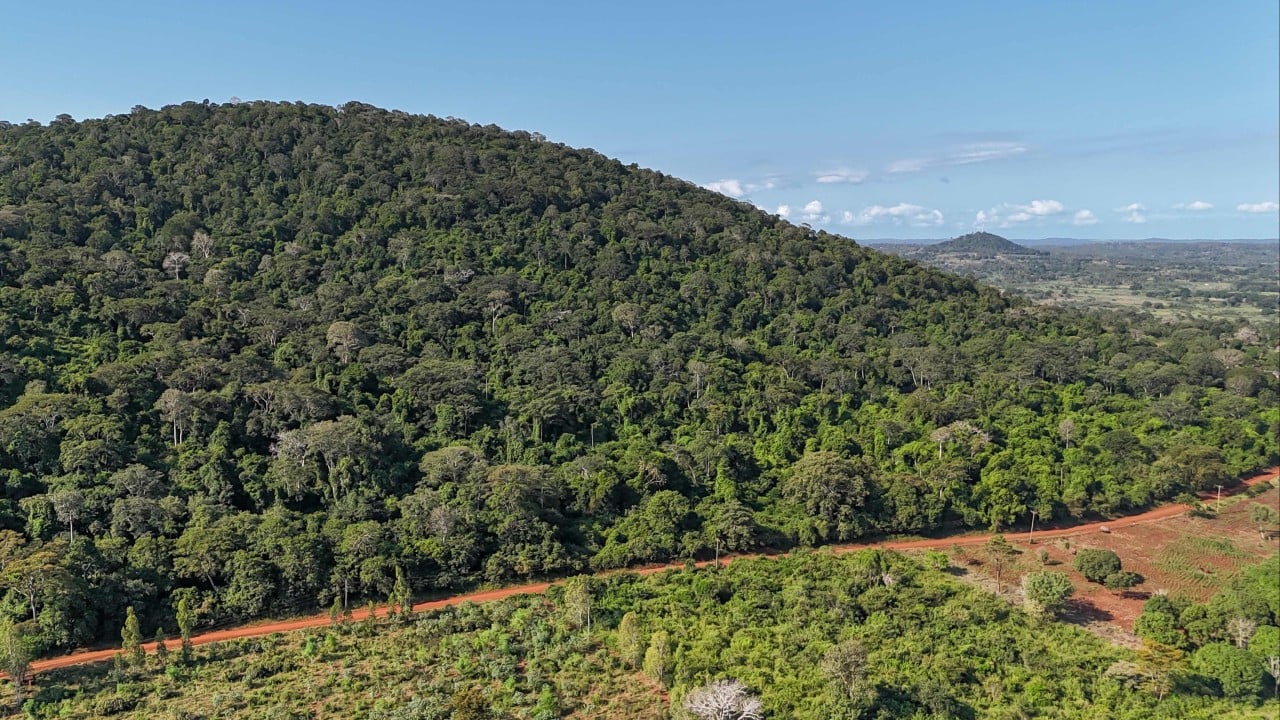
Mrima Hill, a sacred site about 65km (40 miles) southwest of Mombasa on Kenya’s Indian Ocean coast, is emerging as a new front in the US-China rivalry for critical minerals. US-led and Chinese bidders are competing for rights to develop the site, which is rich in rare earths and niobium, a metal used to make steel stronger and lighter. American officials have offered to support Kenya’s development of its domestic critical minerals processing industry as Washington seeks to challenge Beijing’s...
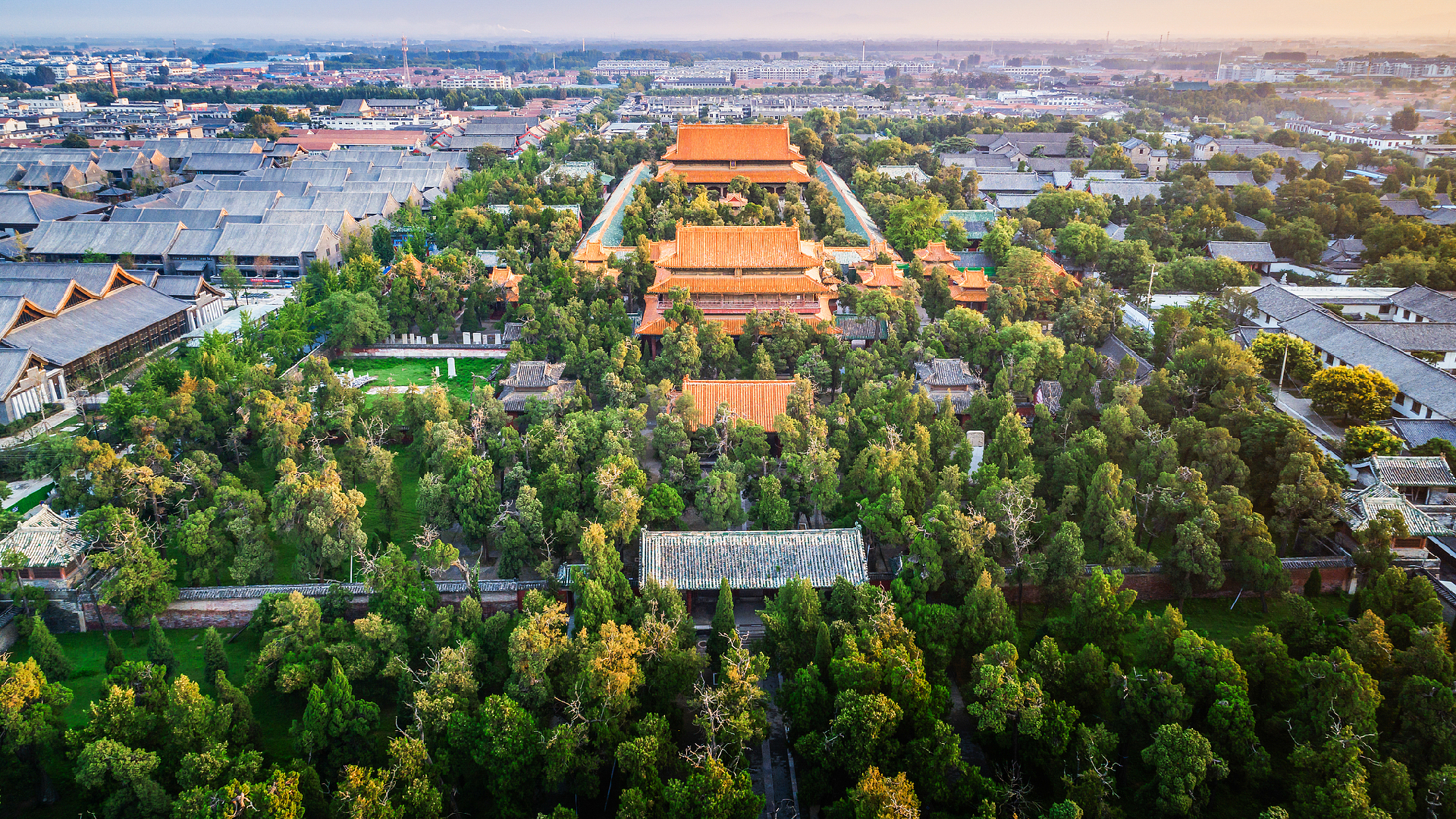
Qufu: Where Confucian heritage lives on