Blue is the new green in Xiamen
At their October meeting in South Korea last year, US President Donald Trump and Chinese President Xi Jinping, recognising mutual vulnerability to export restrictions, agreed to suspend some of the most draconian measures they had imposed on each other: US port fees on Chinese-built vessels and Chinese export controls on rare earths. They also announced further summit-level talks. The leaders have since met twice: Trump visited Beijing in May, Xi visited Washington in September. They are...
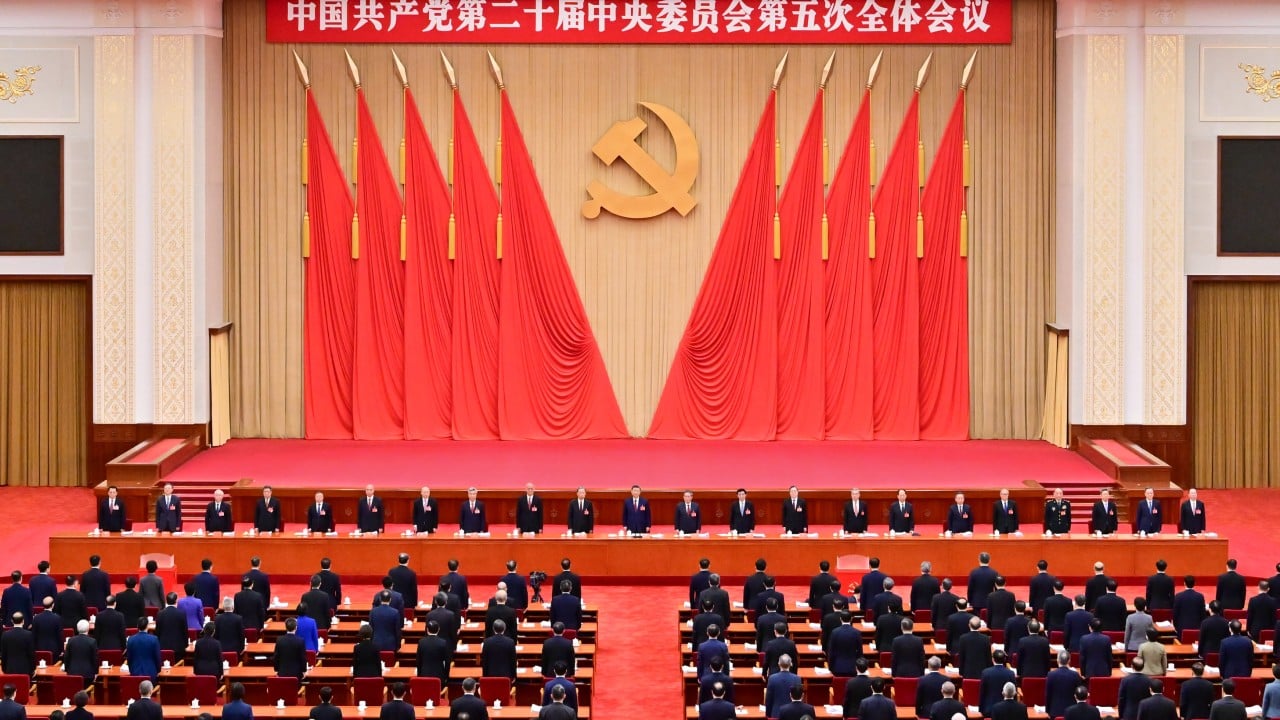
Beijing has hinted at the new leadership line-up in its military theatre commands, with fresh faces emerging during last week’s party conclave in the seating area reserved for key commanders, filling vacancies left by China’s anti-corruption drive. The fifth plenum of the Communist Party’s 20th Central Committee, which concluded last Thursday, focused on party discipline and political loyalty, confirming the expulsion of 33 full and alternate Central Committee members, including 16 senior...
Leaders of overseas institutions have expressed keen interest in taking part in Hong Kong’s planned university towns in the Northern Metropolis megaproject and stress that while financing remains a challenge, they will collaborate on activities to help ensure projects are financially viable. The university heads also called on the Hong Kong government to provide affordable housing in the new university towns, roll out policy incentives to retain top global talent and clearly define what success...
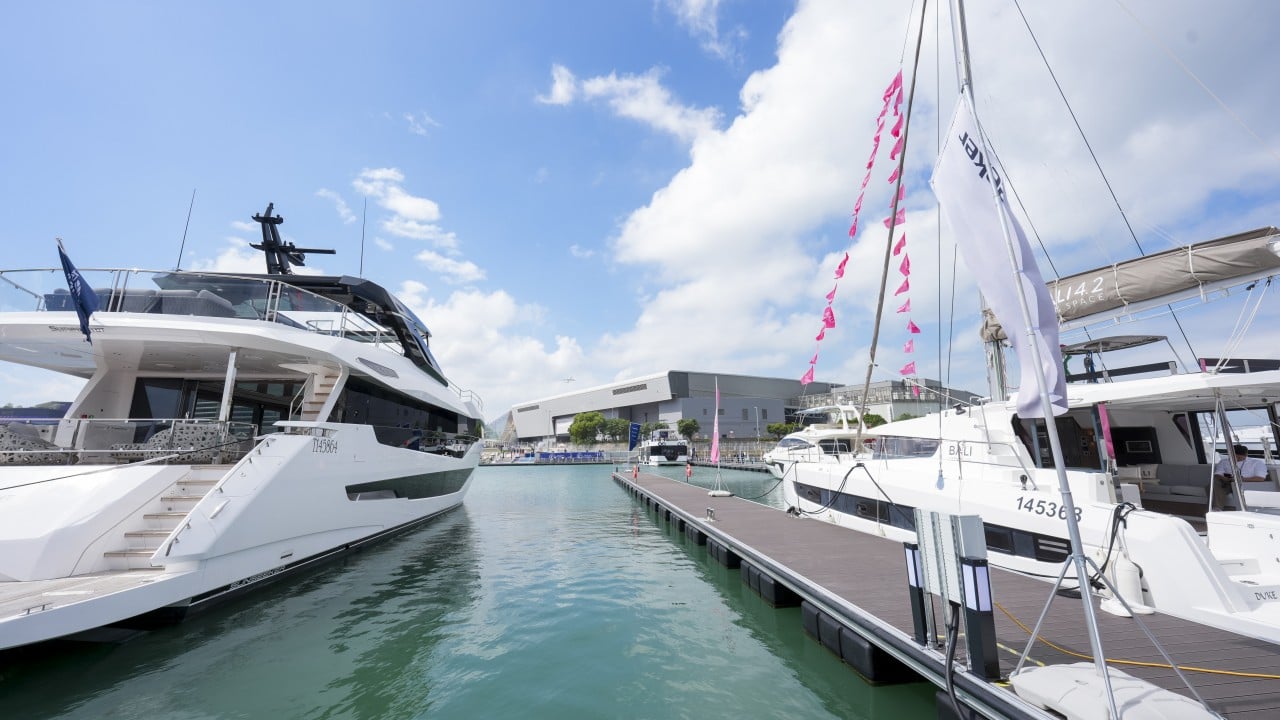
[The content of this article has been produced by our advertising partner.] From private jewellery viewings to stepping aboard a yacht, the Festival of Connoisseurs took visitors beyond the conventional exhibition hall. This luxury festival is the first exhibition supported by a HK$100 million government fund, spearheaded by the Commerce and Economic Development Bureau to attract large-scale, distinctive international exhibitions to Hong Kong. It brought yachts, prestige cars, jewellery and art...
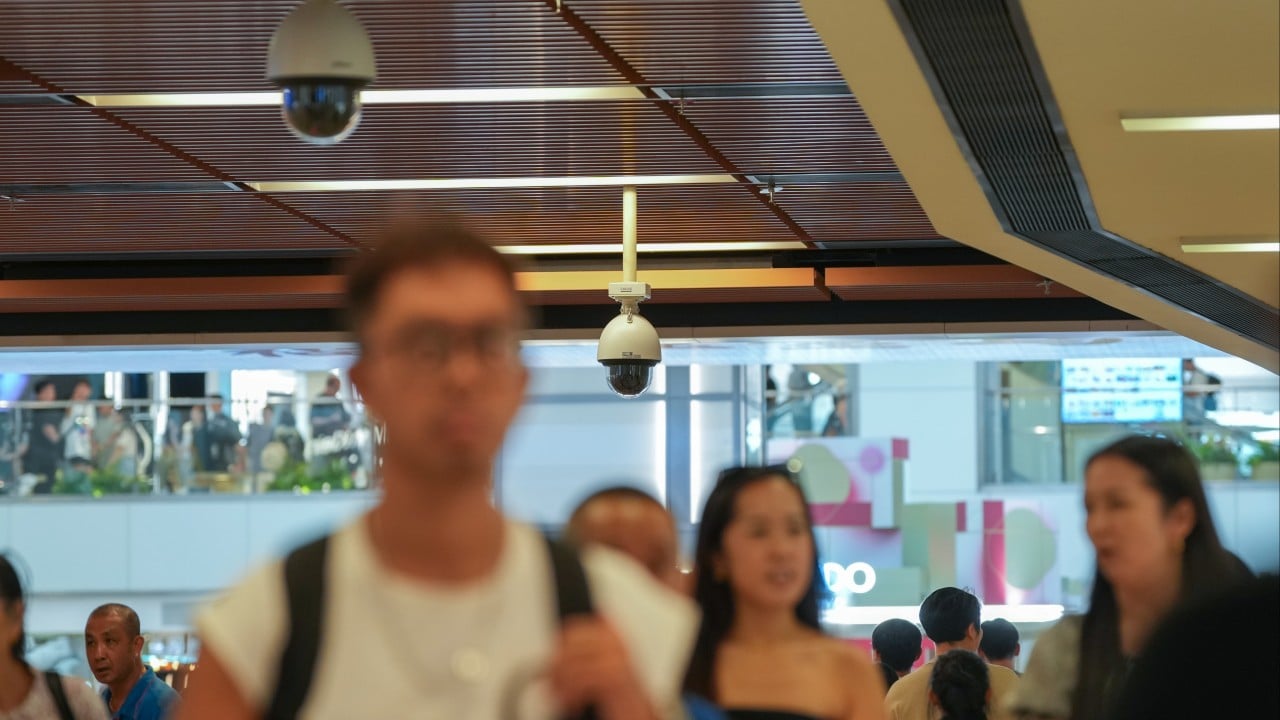
Hong Kong police will enable artificial intelligence-powered facial recognition technology across their expanding smart surveillance network this month to improve the tracking of missing persons or suspects, with plans to save the data it generates for up to 180 days. The force said the facial recognition technology was widely used by law enforcement agencies around the world and stressed that residents’ privacy rights would be protected. “Leveraging AI [facial recognition] would cut the time we...
Hong Kong law firm Woo Kwan Lee & Lo is reportedly relocating to Causeway Bay after more than five decades in Central’s Jardine House, reserving about 39,000 square feet in Hysan Development’s Lee Garden Eight in a major lease for the new commercial complex. Market sources identified the firm as the incoming tenant at Lee Garden Eight, which is scheduled for completion this quarter. The firm will occupy an entire low to middle floor, according to local media reports. The firm declined to...
I was 13 when our family of 10 (mom, dad and eight kids ranging in age from 1 to 15) arrived at Kimpo Airport in August 1966. We arrived a bit prior to the first volunteers of the Peace Corps K-1, because our school started in early September. The older kids attended Seoul Foreign School (SFS) in Yeonhui-dong, behind Yonsei University. In fact, the founders of our school were some of the same missionaries who founded Yonsei, such as the Underwoods, the Allens and the Avisons. Today, there is a statue to Horace Grant Underwood in front of one of the Yonsei buildings. Being born and raised in Cleveland, Ohio, and at our young ages, none of us kids were very familiar with the outside world, so when Dad (Kevin O'Donnell, the first Peace Corps country director for Korea) told us he got a new job and we were going to move to Korea, we thought he said Berea, a Cleveland suburb near the airport, and wondered why in the world would anyone want to move there. He said, "Not Berea — Korea. It's a foreign country over by China and Japan." This got most of us quite excited, but my older sister wa
As I trudged across Sinchon Rotary and up the steep walkway to Severance Hospital, I kept repeating to myself a phrase from a childhood story about a train engine: “I think I can, I think I can.” It was a bitter cold winter morning in 1969. Today was the day that I was to come to the hospital and show the doctors in the ear, nose and throat section of the hospital that I could, indeed, get a deaf child to speak. Only days earlier, I had arrived in Korea to volunteer for the Peace Corps at age 23. Once it got around that I had training as a speech therapist for the deaf, Peace Corps Korea Director Kevin O'Donnell urged me to pursue it. At the time, Korea had no speech pathology center. George Worth, an American missionary in Korea, introduced me to staff at both Seoul National University (SNU) Hospital and Severance Hospital. Both hospitals were interested in starting a program but wanted to see how it could work, so they told me to come back the next day, when they could bring me a patient. That's how I found myself "auditioning" for a speech and hearing center. I was confident tha
One evening in Seoul, having nothing better to do, I decided to go out on the town in Myeong-dong with my friend Ron Rezac, a fellow Peace Corps Volunteer. Back in the 1960s, Myeong-dong was a trendy spot for Korean youth, filled with bars, cafes and music venues. After a few hours and a few beers (maybe more than a few), I let it be known that I, strangely, wanted to cap off the evening with some tea. The two of us hightailed it to a nearby "dabang" cafe, walked up some stairs to get in and were met at the door by a man who told us the place was closed and we couldn't come in. "What do you mean we can't come in!" we protested. "We have our rights!" we demanded in our excellent Korean, no doubt causing him to nearly keel over from the fumes of our beer breath. Seemingly at a loss, he let us in, pointing to a table where he wanted us to sit. Once inside, we learned that the reason they didn't want to let us in was that a movie company had taken possession of the dabang for the night to shoot a feature film. They decided on the spot that the scene in the dabang would now include two drunk
Children awaiting adoption in Korea are losing precious time to form bonds with permanent families as lengthy reviews and unclear screening standards delay placements, the head of an adoptive families’ advocacy group said. In an interview with The Korea Times after a press conference Tuesday outside the Board of Audit and Inspection in central Seoul, Oh Chang-hwa, head of the National Adoptive Family Federation, called for faster adoption matching and transparent assessment standards. “Children are there and parents are there. But they cannot meet,” he said. His organizations and six other civic groups submitted a petition asking the state auditor to inspect the screening and matching procedures under the new adoption system, which took effect on July 19, 2025, shifting responsibility for adoption procedures from private agencies to the central and local governments. Their complaints center on administrative delays, allegedly inconsistent screening and excessive collection of sensitive family information. According to figures submitted to the National Assembly and cited by the fede
The 1980 Gwangju Uprising produced a great many memorable photos, not least of which was one of a young man with blonde hair helping carry a man on a stretcher through the streets. The identity of this foreigner remained a mystery for decades, but as U.S. Peace Corps Volunteers (PCV) who were there began publishing their memoirs, his identity and role in the uprising gradually came into focus. The person in the photo was a PCV named Tim Warnberg, who had arrived in Korea in 1978 to work as a health volunteer at Gwangju Christian Hospital. Those who knew him before his arrival in Korea remember him as someone whose character and concern for others help explain his actions in 1980. Warnberg was from Brainerd, Minnesota, where his father was the town’s longest-serving sheriff. His mother was, as his sister Roxanne Wilson remembers, “devoted to caring for others” and creating “a home that was warm and inviting to neighbors, friends and persons in need.” As his closest childhood friend, Keevie Fairbanks, put it, “Tim was the best of both of his parents.” Robert Grotjohn, who at
It may come as a shock to many these days that the Peace Corps once had a mission in Korea. The U.S. volunteer agency sent more than 2,000 young volunteers to Korea between 1966 and 1981 in 51 waves, from K-1 to K-51. The country they arrived in was very different from the advanced nation Korea has grown to become. Coming out of the 1910-45 Japanese occupation and 1950-53 Korean War, Korea was for decades one of the poorest nations in the world. In the mid-1960s, when Peace Corps Volunteers (PCVs) began arriving, Korea's hills were barren, and the gutters were filled with human waste. The authoritarian government maintained a strict curfew, barring people from the streets from midnight to 4 a.m. “My first impression was ‘My god, what have I got myself into?’” Ed Klein (K-1) said in 2016. “It was the way it was,” David McCann (K-1) said in 2019, “and that didn't strike me as strange.” U.S. President John F. Kennedy established the Peace Corps in 1961 with an executive order. It was designed to serve three main goals: helping various countries meet their need for trained me